
Shotcrete is a mix of sand, pea gravel, cement and water, shot in place to create your pool shell using compressed air. Sometimes referred to as pneumatically applied concrete, shotcrete gives us the ability to create free formed swimming pools, spas and water features.
A shotcrete pool or spa is custom built and very durable. After designing your pool, we excavate the site based on the soil conditions. Normally gravel is spread in the excavated area. Reinforcing rebar, tie wires, blocks and other forms are laid in place to further form the swimming pool, spa or water feature. Plumbing for the main drain, skimmers, returns and any other pipes are set, as well as electric conduit and lights are all roughed in.
The shotcrete is shot into place and troweled to a semi-smooth finish. Around the rim of the pool, coping is put into place. This can be precast concrete of various colors, flagstone, tile or poured concrete. The tile of your choice is then installed to the water line, and often to the sides, bottom and more. Mosaics and accent tiles are then installed. When your swimming pool is ready to complete we will wash the shotcrete shell and add the plaster finish or upgraded finish such as all tile or color quartz of your choice. Your swimming pool will then be ready to fill with water and heated.
Pool costs vary. Cost depends on the location, condition of soil, size and complexity of features. Contact us to talk about your pool, your budget and how we can put it all together for you.
With today's conveniences, owning a swimming pool and spa is easier than owning a car! Chemical testing and maintenance, cleaning and preprogrammed filtration and heating can all be automated if you choose to include these options during the construction phase. Automatic pool cleaners and various sanitation devices, along with an automatic cover make your swimming pool a pleasure to maintain.
Your pool will set your home apart from others in the mind of a potential buyer. A pool adds equity to the value of your home and quality to your home life. It is hard to put a price on that value.
Remodeling your old swimming pool will make a dramatic difference in the overall look, as well as reducing the maintenance and energy costs to maintain you pool.
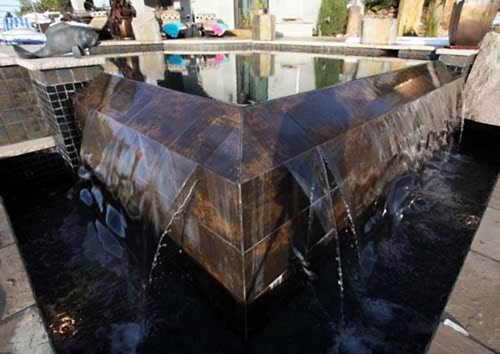
An infinity edge is a pool or spa with one or more sides having a "negative edge," meaning that it is even with the waters level in the pool. Water spills over the edge into a catch basin below, where it is pumped back into the pool or spa. The effect is absolutely breathtaking!
A spa adds a new dimension to your outdoor relaxation. The warm water is comforting for adults and children alike and a spa is also a great way to add water features such as waterfalls and fiber optics.
The “Green” technology of today has made owning a swimming pool a true pleasure. When you add innovative water treatment systems, automatic cleaning systems, remote controls and automatic pool covers you’re gaining more time for you and your family. Fiber optics, waterfalls, spas, water jets and tile or glass mosaics are just a few of the features that you could request to make your swimming pool uniquely your own.

We start with a couple of meetings to understand your goals, preferences, and budget. After that, we provide a ROM (Rough Order of Magnitude) estimate, which is a realistic budget range based on your project.
If everything aligns, we move into design development, where we create 3D renderings, layouts, and detailed plans. Once finalized, we move into a construction contract and schedule your project.
A ROM (Rough Order of Magnitude) estimate is an accurate preliminary budget that breaks down costs for the pool, spa, and optional upgrades.
It’s not the final contract, but it’s designed to:
Design development is typically around $1,200, but that cost is waived if we build your pool.
If you decide not to move forward or use another builder after design work is completed, the fee would apply.
Projects can take longer depending on:
Your spot in the schedule is secured after the construction contract is signed.
The faster decisions are made during design, the sooner we can lock in your timeline.
Pool size depends heavily on:
In many cases:
Most modern pools are:
Other options include:
Not necessarily. Many homeowners skip deep ends unless they specifically want:
That’s personal preference.
Some homeowners love them, but others skip them to:
You can customize:
Longer steps can double as seating without taking up too much swim space.
Both are options:
Raised spa:
Flush (same level as or inside the pool):
Yes, if designed correctly.
This can save tens of thousands of dollars by:
It depends on the layout:
This is worked out during design based on functionality and layout.
The interior finish is typically plaster, with four main color options:
Each affects how the water looks depending on sunlight, surroundings, and depth.
No, water color changes based on:
Yes. Every pool includes a waterline tile band to:
Full tile interiors are optional but significantly more expensive.
All pools include sanitation automation and chemical control systems that:
Yes, all pools use chlorine, including saltwater systems.
However, automation keeps levels:
Saltwater can feel better on skin, but:
Both systems have pros and cons, which are reviewed during design.
Yes. You’ll have full control through an app to:
Your builder/maintenance team can also access it remotely for support.
Two main options:
In-floor cleaning system:
Robot cleaner:
Yes. The system is designed to work best with professional maintenance to:
No, these pools are not designed to be shut down for winter.
Winterizing can:
Yes, and that’s the intent.
Optional insulation can:
Major variables include:
Soil conditions determine how the pool is built:
In some cases, poor soil can add substantial cost.
(Exact pricing depends on engineering requirements.)
You transition to our dedicated maintenance team that:
It’s recommended to: